Car Suspension System: Parts, Names, and How They Work Together
A car suspension system does more than smooth out bumps — it keeps your tires in contact with the road surface under braking, cornering, and acceleration, which directly affects how safely and predictably your vehicle handles. When any component in the suspension system fails, you feel it as pulling, vibrating, or uneven tire wear before you see it. Knowing the suspension system parts and their roles helps you communicate clearly with a mechanic, understand repair estimates, and catch problems before they escalate.
This guide covers the full suspension parts list with plain-language explanations, the suspension parts names you’ll encounter in service manuals and at the shop, and what each component actually does.
How a Car Suspension System Works
The suspension connects your vehicle’s frame to its wheels. It serves three purposes simultaneously: supporting the weight of the vehicle, absorbing road impacts to protect occupants and cargo, and maintaining tire contact with the road during dynamic maneuvers. These three goals sometimes conflict — a very soft suspension that absorbs bumps beautifully may allow too much body roll during cornering — which is why suspension tuning is a balance of trade-offs rather than a single correct answer.
Modern passenger cars use independent suspension at each corner, meaning each wheel can move up and down without directly affecting the opposite wheel. Trucks and older vehicles may use solid axles at one or both ends, where the wheels on an axle move together.
Core Suspension System Parts Explained
Springs
Springs store and release energy when the suspension compresses and extends. Coil springs are the most common type on modern vehicles — a helical metal coil that wraps around or alongside the shock absorber. Leaf springs (stacked metal strips) appear on truck rear axles. Torsion bars use a twist of a metal rod instead of a coil. Air springs replace metal with an air-filled bladder and allow ride height and stiffness adjustment.
Shock Absorbers and Struts
Springs absorb energy; shocks and struts dissipate it. A shock absorber (or damper) uses hydraulic fluid forced through small orifices to convert kinetic energy into heat, preventing the vehicle from bouncing repeatedly after a bump. A strut combines the shock absorber with a structural element of the suspension assembly — removing a strut affects wheel alignment because the strut itself is part of the geometry. On vehicles with strut suspension, the strut is one of the suspension part names you’ll hear most often in service estimates.
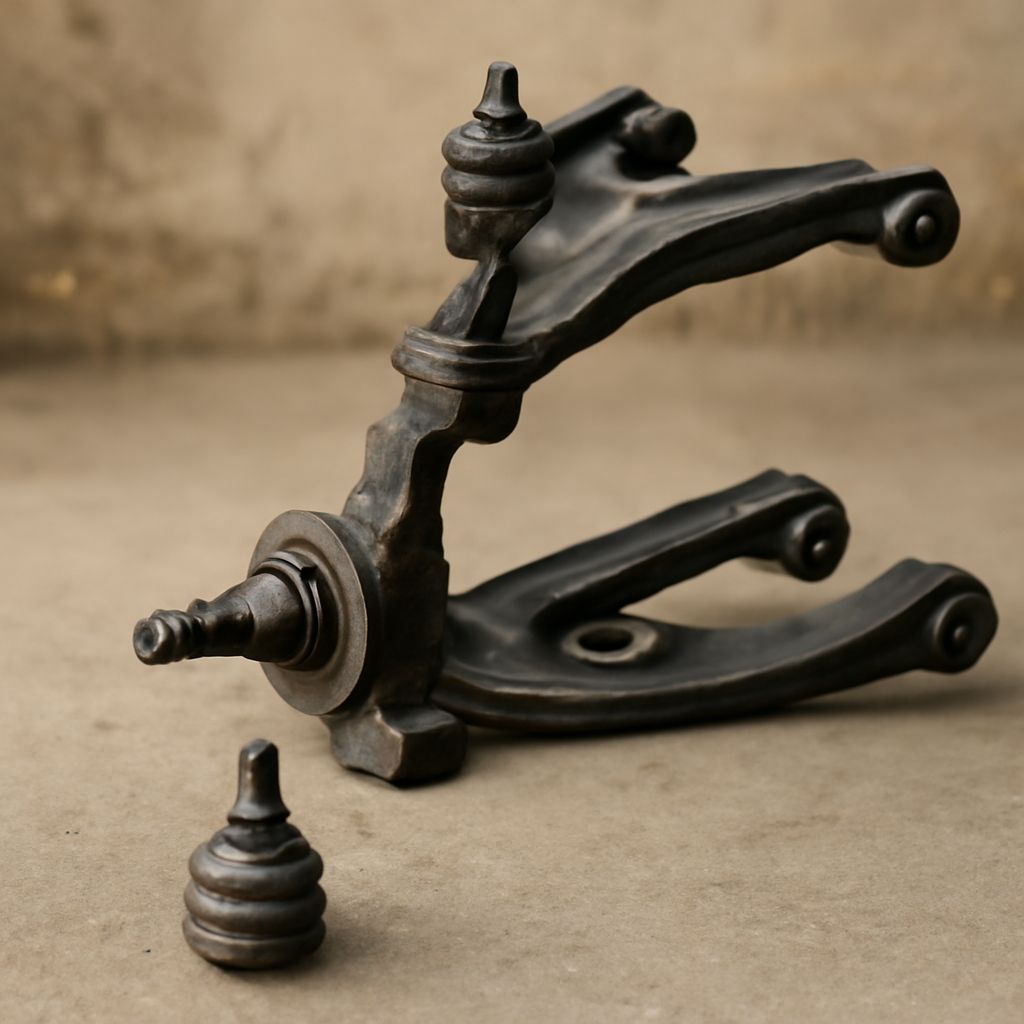
Control Arms Control arms (sometimes called A-arms or wishbones) connect the wheel hub assembly to the vehicle frame. Upper control arms and lower control arms work together to define the path the wheel takes as it travels up and down. The bushings at the inner pivots of the control arms allow rotational movement while isolating road vibration from the cabin. Worn control arm bushings are a frequent source of clunking sounds over bumps and degraded steering feel.
Ball Joints Ball joints are pivot points where the control arms connect to the steering knuckle. They allow the wheel to steer and the suspension to move simultaneously. Upper and lower ball joints are separate components in double-wishbone suspension. On strut suspension, typically only a lower ball joint is present. A worn ball joint that fails completely can cause the wheel to separate from the suspension — one of the more dangerous failure modes in a car’s suspension parts list.
Steering and Stabilizing Components
Tie Rods
Tie rods transfer steering input from the rack or steering gear to the wheel. Inner tie rods connect to the rack; outer tie rods connect to the steering knuckle. Worn tie rod ends cause looseness in steering and contribute to tire edge wear. Replacing tie rods requires wheel alignment afterward.
Sway Bars and End Links
The sway bar (also called anti-roll bar or stabilizer bar) is a U-shaped metal bar that connects the left and right sides of the suspension. When one side compresses more than the other during cornering, the sway bar transfers force to the other side, reducing body roll. Sway bar end links connect the bar to the suspension on each side and are a common wear item — failed end links produce a clunking rattle over bumps that’s often mistaken for a more serious problem.
Wheel Bearings and Hubs
Wheel bearings allow the wheel to rotate freely on the axle or hub. They are technically part of the wheel assembly rather than the suspension system, but they interact directly with suspension geometry and are often serviced at the same time as other suspension components. A failing wheel bearing produces a rumbling or grinding sound that changes with vehicle speed and sometimes varies with steering input.
Key takeaways: Your car’s suspension system is a network of interconnected components — replacing one worn part while ignoring adjacent worn components often means the repair doesn’t last. Always ask a technician to inspect related suspension parts when servicing any individual component, and realign the wheels after any suspension work that affects geometry.