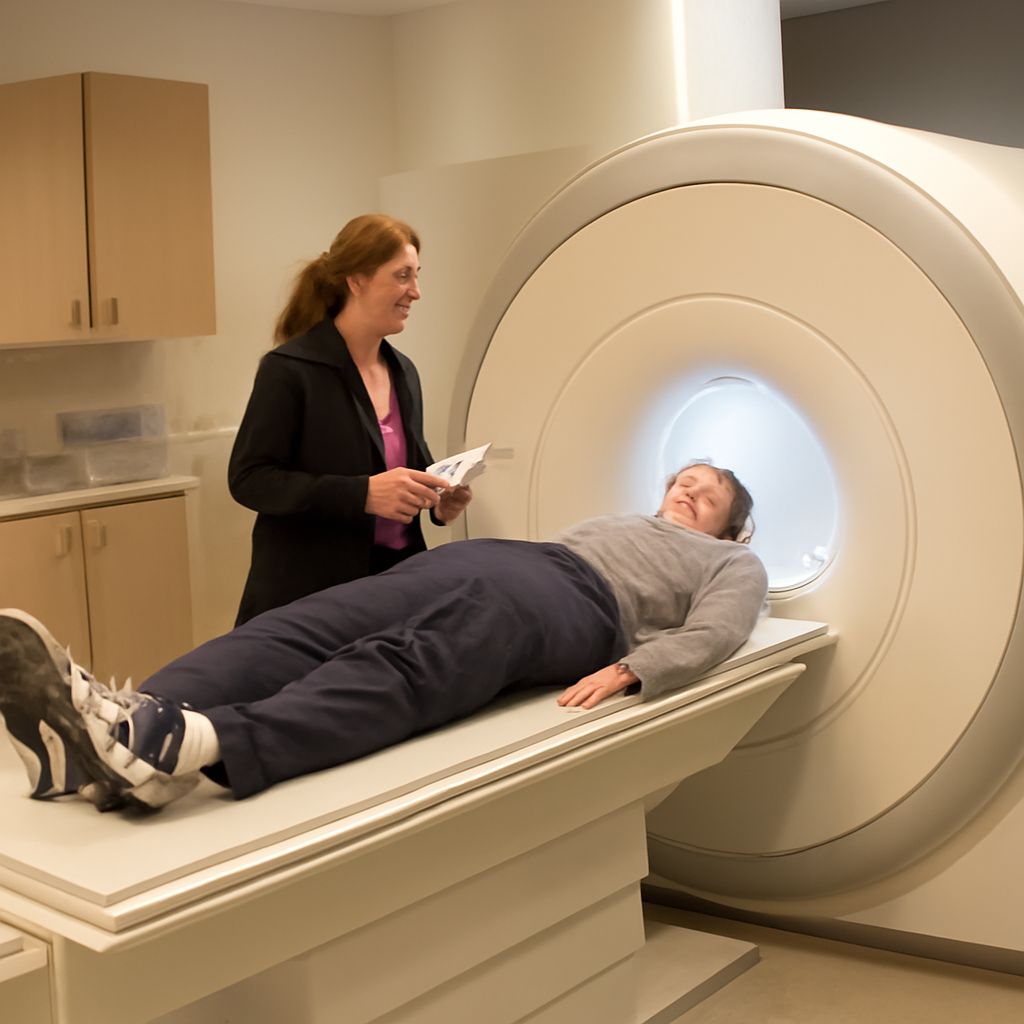
How Long Does a Brain MRI Take? Planning the Visit
How much time should a patient allow for an MRI of the brain? RadiologyInfo says the entire brain MRI examination is usually completed within 30–60 minutes. The time at the imaging center can be longer because registration, safety screening, changing, and other steps occur around the examination. The center’s estimate for the particular appointment is the best basis for planning.
How Long Does MRI of Brain Take With Different Protocols?
How long does a brain MRI take when the clinical question changes? The answer depends on the protocol: the set of images and techniques chosen for the study. An examination may include several sequences, each producing a different view or type of information. Some requests need additional sequences or images of nearby structures, which can change the time required.
The scanner and local workflow also matter. A center’s estimate reflects its equipment and the examination ordered. A patient who needs more than one body area imaged should ask whether the stated time covers all of them. The 30–60-minute figure is a general guide for a brain examination, not a promised appointment length.
How long does an MRI of the brain take if contrast is planned? The imaging center can provide a more specific estimate once it knows the requested protocol. Contrast may add an IV placement, an injection, and additional images; the exact effect on timing varies. Ask whether the scheduled slot includes these steps.
Scan Time Versus Visit Time
The phrase “scan time” can refer to the time acquiring images or, more loosely, the time in the examination room. The full visit begins earlier and can continue after the images are taken. When asking how long a brain MRI will take, it helps to specify which interval matters.
A typical visit may include:
- Registration and screening: staff confirm identifying information and review the MRI safety questionnaire.
- Changing and preparation: the patient may change clothes and remove objects that cannot enter the scanner room.
- Positioning and imaging: the technologist positions the patient and collects the planned sequences.
- Finishing: staff may check the images and remove an IV if one was used.
Some of these stages can overlap with the appointment slot, while others may be scheduled before it. Waiting time at the center can also vary. An arrival time printed on an appointment notice may therefore be earlier than the planned start of imaging.
Contrast and Additional Steps
Some brain examinations use an intravenous contrast agent to make certain findings easier to assess. A member of the team places an IV and gives the agent according to the protocol. Images may be acquired before and after the injection. A patient should not assume that every brain examination includes contrast; the order and the imaging team’s assessment determine the plan.
The center may need information about prior contrast reactions, kidney problems, and other relevant conditions before the visit. If further screening or clarification is needed, it can affect scheduling. The center’s instructions explain what information to provide and any preparation required for that specific examination.
If sedation is planned, the visit may include assessment beforehand and recovery afterward. The team can explain the expected recovery period and transportation arrangements. These steps are separate from the time spent acquiring images and may make the overall visit substantially longer.
Motion, Comfort, and Repeated Images
How long does MRI of the brain take if images are blurred? The technologist may need to repeat a sequence, adding time to the examination. The scanner acquires images in sequences, often lasting a few minutes each. Remaining still during each sequence helps produce clear pictures. Movement can blur an image. A pause for comfort or a change in positioning can also extend the examination.
The patient can hear and speak with the technologist through an intercom and can alert the team if help is needed. Someone who expects pain while lying flat or has concerns about enclosed spaces can contact the center ahead of time. Discussing these needs allows staff to explain available support and whether the appointment needs additional arrangements.
Planning Around the Center’s Schedule
How long does an MRI take, brain imaging included? The examination itself commonly falls within the published 30–60-minute guide, but a center can estimate the particular study and the time needed around it. Ask for the expected arrival time, scan-room time, and likely departure time, including any contrast or recovery arrangements.
A separate question is how long an MRI of the brain takes to be reported. Image interpretation happens after acquisition: a radiologist reviews the images and sends a report to the referring clinician. Ask the center or ordering office when the report is expected and who will discuss the findings. A longer wait for results does not necessarily mean the examination itself took longer.