Normal vs Abnormal Ovary Ultrasound: Reading Pelvic and Thyroid Scan Results
Understanding normal vs abnormal ovary ultrasound results is one of the most anxiety-provoking parts of a pelvic workup — you’ve seen the images, your radiologist has written a report, and now you need to make sense of the terminology. Pelvic ultrasound images capture anatomy in real time using sound waves, and what looks concerning to an untrained eye is often a normal variant. At the same time, genuinely abnormal pelvic ultrasound findings require timely follow-up. This article helps you understand what you’re looking at and what questions to ask your provider.
We also cover transabdominal pelvic ultrasound technique versus transvaginal approach, and touch on thyroid ultrasound results explained — because many patients undergo both studies and find the reporting language similarly opaque.
How Pelvic Ultrasound Images Are Obtained
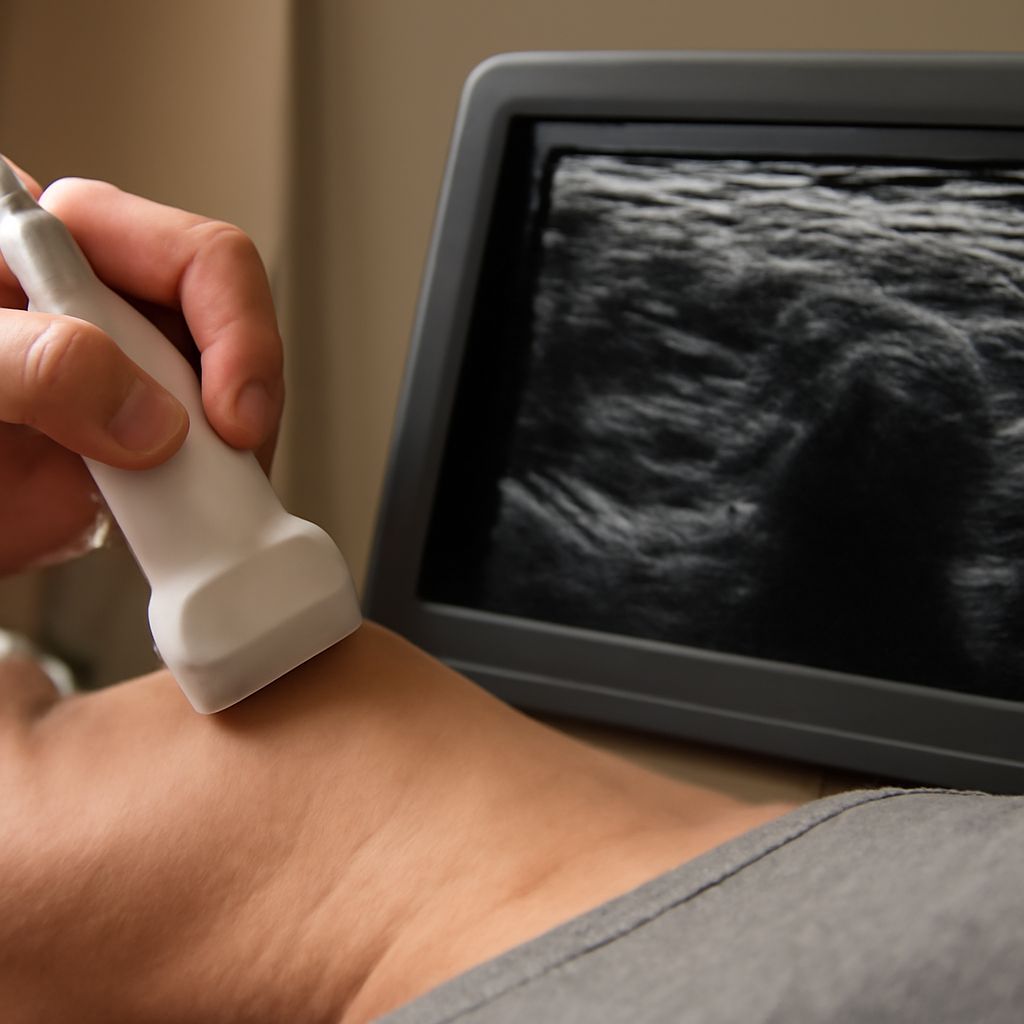
Transabdominal vs. Transvaginal Approach A transabdominal pelvic ultrasound uses a probe pressed against the lower abdomen with gel as a coupling medium. It requires a full bladder to push bowel out of the way and provide a fluid window. This approach gives a broad overview of pelvic anatomy but may not show fine ovarian detail in patients who are obese or have a retroverted uterus.
The transvaginal approach places a covered probe inside the vagina, directly adjacent to the uterus and ovaries. It provides sharper resolution for small ovarian follicles, early gestational sacs, and subtle endometrial abnormalities. Most comprehensive pelvic studies use both techniques sequentially for the complete picture that pelvic ultrasound imaging is designed to provide.
What Normal Ovaries Look Like on Ultrasound Normal ovaries measure approximately 2–3 cm in length by 1.5–2 cm in width, though size varies with age and menstrual cycle phase. In reproductive-age patients, ovaries typically show small follicles — anechoic (dark) round structures — representing developing eggs. A dominant follicle near ovulation may reach 18–24 mm. Post-menopausal ovaries are smaller and often difficult to visualize. Seeing follicles on an ovarian ultrasound scan is not abnormal; it is expected.
What Normal vs Abnormal Ovary Ultrasound Results Mean
Common Findings That Are Usually Benign Several findings on ovarian ultrasound images appear alarming but are almost always benign:
- Simple cysts — Smooth-walled, anechoic (no internal echoes), no solid components. In premenopausal patients, simple cysts up to 5 cm are usually functional and resolve on their own.
- Corpus luteum — Appears as a thick-walled cystic structure after ovulation. May have internal hemorrhagic material. Normal finding in the luteal phase.
- Follicular cysts — Larger than normal follicles (usually 3–5 cm), typically resolve within one to two menstrual cycles.
- Nabothian cysts — Smooth retention cysts on the cervix, normal variant with no clinical significance.
Abnormal Pelvic Ultrasound Findings That Need Follow-Up
Distinguishing normal from abnormal on a pelvic ultrasound requires looking at several characteristics simultaneously. Features that increase concern for a pathological ovarian lesion:
- Internal septations (dividing walls) within a cyst
- Solid components or nodules within a cystic mass
- Increased blood flow on Doppler imaging within a solid component
- Bilateral ovarian involvement with free fluid in the pelvis
- Cysts larger than 5–7 cm in premenopausal patients, or any new cyst in postmenopausal patients
An abnormal pelvic ultrasound finding warrants a follow-up conversation with your gynecologist, additional imaging (typically MRI), or repeat ultrasound in 6–12 weeks to assess for change. Most complex cysts in premenopausal patients remain benign even with complex features.
Thyroid Ultrasound Results Explained
When thyroid ultrasound results reference nodules, the reporting usually uses the ACR TIRADS (Thyroid Imaging Reporting and Data System) classification. TIRADS scores run from 1 (normal) to 5 (high suspicion for malignancy), based on nodule composition, echogenicity, shape, margins, and calcifications.
Most thyroid nodules found incidentally are TIRADS 2 or 3 — benign or low-suspicion — and require only follow-up ultrasound imaging at recommended intervals rather than immediate biopsy. A TIRADS 4 or 5 nodule above a certain size threshold typically prompts fine-needle aspiration biopsy for definitive tissue diagnosis. The size thresholds differ by TIRADS category: a TIRADS 4 nodule over 1.5 cm usually warrants biopsy; a TIRADS 5 nodule over 1 cm does.
Explaining your thyroid ultrasound results to yourself means looking at three things: the TIRADS score, the nodule size, and the recommendation in the “impression” section of the radiology report. If the radiologist recommends biopsy, ask your endocrinologist or ordering physician about the specific TIRADS category and size that drove that recommendation before proceeding.