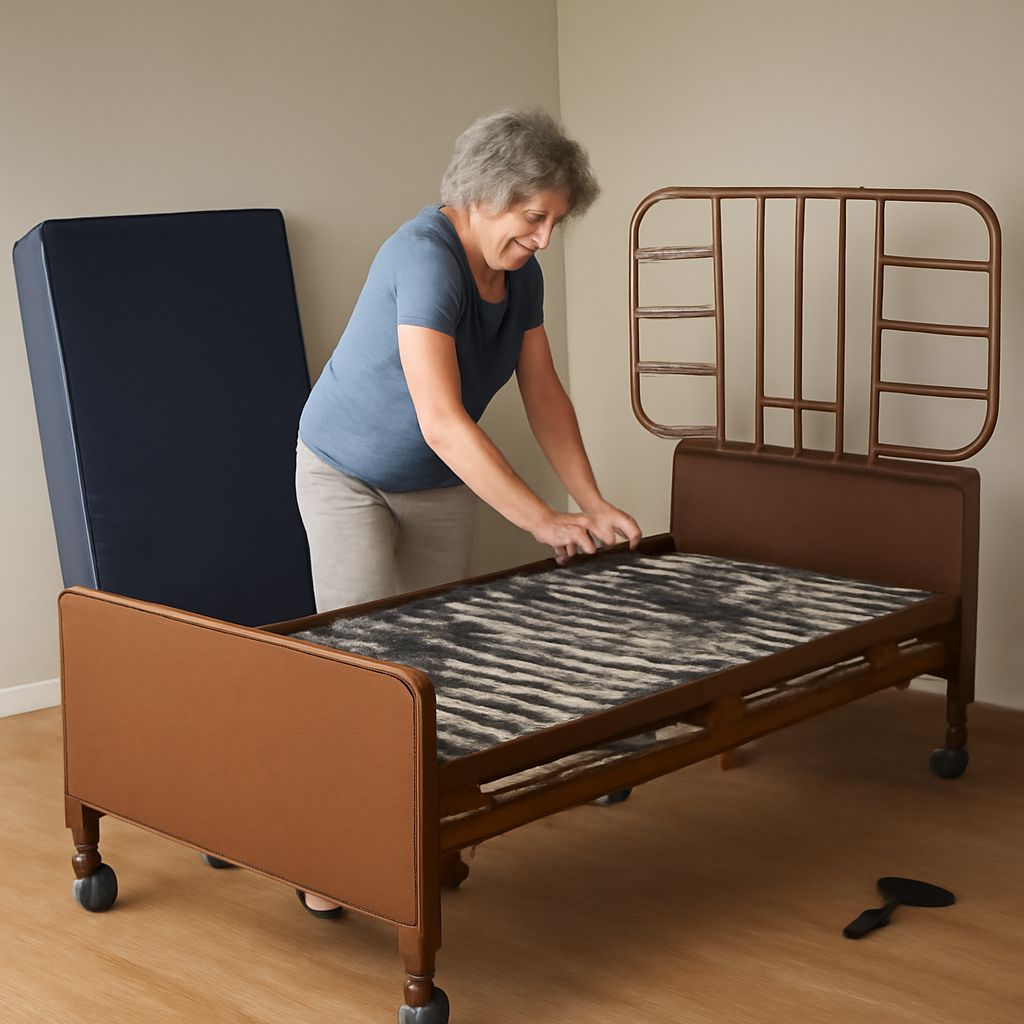
Hospital Bed Mattress: How to Choose the Right One for Home Care and Recovery
Selecting the right hospital bed mattress matters far more than most caregivers and patients realize when setting up home care or long-term recovery. A poor mattress choice leads to pressure injuries, disrupted sleep, increased pain, and in immobile patients, serious skin breakdown that extends healing time and hospital stays. The mattress for hospital bed selection should be based on the patient mobility level, skin integrity, care setting, and how much time will be spent in bed daily.
Hospital mattresses are not one-size-fits-all products. The range of options from basic foam hospital bed mattresses to powered alternating air systems reflects dramatically different patient needs and risk profiles. Understanding what separates a basic foam product from a low air loss or alternating pressure system helps caregivers match the right mattress to the right patient, whether the setting is a home care arrangement, a skilled nursing facility, or an acute hospital floor.
Types of Hospital Bed Mattresses and Their Uses
The most basic hospital bed mattresses are high-density foam products designed for patients with low pressure injury risk who spend limited time in bed. These foam mattresses provide a firm, supportive surface for postoperative recovery or short-term illness when patients remain mobile and reposition themselves regularly. They are the least expensive option and are suitable for the majority of home hospital bed setups for patients recovering from orthopedic surgery or illness.
Gel-infused foam mattresses offer better pressure distribution than standard foam by incorporating gel layers that conform to body contours and dissipate heat. These products occupy a middle tier in the mattress for hospital bed spectrum, appropriate for patients with moderate immobility or elevated pressure risk who do not require a powered support surface. Gel foam mattresses are a common upgrade in home care settings for patients who will be spending extended hours in bed during recovery.
Alternating pressure mattresses use a powered pump to cyclically inflate and deflate air cells, redistributing pressure every few minutes across the patient contact surface. This mechanical cycling mimics the pressure relief that comes from natural repositioning and is the standard intervention for patients at high risk of pressure injuries or those who already have Stage I or II pressure ulcers. These systems require a reliable electrical supply and periodic equipment maintenance.
Pressure Injury Prevention: Matching Mattress to Patient Risk
Mattress selection for patients with elevated pressure injury risk should be guided by a standardized risk assessment tool. The Braden Scale, which evaluates sensory perception, moisture exposure, activity level, mobility, nutrition, and friction and shear, provides a numeric score that stratifies risk. Patients scoring below 18 have elevated pressure injury risk; those below 13 are at high or very high risk and typically require a powered support surface.
Patients with existing pressure injuries require upgrading to a higher-level support surface, not just better repositioning schedules. Stage III and IV injuries, or multiple injuries, generally require a low air loss or air fluidized mattress surface rather than a standard alternating pressure product. These higher-specification mattresses are available through durable medical equipment suppliers and are often covered by Medicare or Medicaid when prescribed with supporting documentation of the wound and risk assessment.
Caregiver attention to repositioning intervals remains essential even with the best mattress. Powered support surfaces reduce pressure injury risk but do not eliminate it entirely. Keeping a turning schedule log, ensuring adequate nutrition, and managing moisture from incontinence or sweating alongside the appropriate support surface gives patients the best chance of maintaining skin integrity during extended bed rest.
Hospital Bed Mattresses for Home Use: What to Look For
Mattresses for hospital beds used at home are designed to fit standard home hospital bed frames, which typically measure 36 by 80 inches. Mattress thickness affects the function of adjustable bed mechanisms and side rail clearance. Most home hospital bed mattresses range from 4 to 8 inches in thickness; thicker products provide better pressure relief but may change the height of the bed surface in ways that affect patient transfers and caregiver working height.
Waterproof cover materials are a practical necessity for home hospital bed mattresses. Patients with incontinence or wound drainage need a mattress cover that can be wiped clean or laundered without compromising the mattress foam or air cell integrity. Look for covers rated for repeated disinfection with hospital-grade cleaning agents if infection control is a concern.
Weight capacity ratings matter when selecting hospital bed mattresses for bariatric patients. Standard mattresses are typically rated for 350 to 450 pounds. Bariatric mattresses designed for patients above this weight range are available from specialty durable medical equipment suppliers and pair with bariatric-rated hospital bed frames. Using a standard mattress on a bariatric bed frame, or exceeding a mattress weight rating, accelerates foam compression and reduces the effective support life of the product.
Where to Buy and Rent Mattresses for Hospital Beds
Hospital bed mattresses are available through durable medical equipment suppliers, medical supply retailers, and online platforms. Renting a powered alternating pressure system through a DME supplier is often preferable to purchasing when the need is temporary or when the home care period is uncertain. Monthly rental rates for alternating pressure mattresses run $50 to $150 depending on the system type, which can be more cost-effective than purchasing for a recovery period measured in weeks to months.
Medicare Part B covers alternating pressure and low air loss support surfaces for eligible patients with qualifying pressure injuries or conditions. The prescribing physician must document medical necessity including the wound staging, duration, and the clinical rationale for the specific surface prescribed. Coverage requires use of a Medicare-enrolled DME supplier. Verifying coverage eligibility before committing to a rental or purchase saves significant out-of-pocket cost.
For patients purchasing a home hospital bed mattress for long-term use, foam mattresses typically last three to five years under normal home care use before foam compression reduces their effectiveness. Air cell systems require pump maintenance and periodic cell replacement. Building a replacement timeline into the care plan prevents situations where mattress degradation goes unnoticed until patient skin integrity is already compromised.