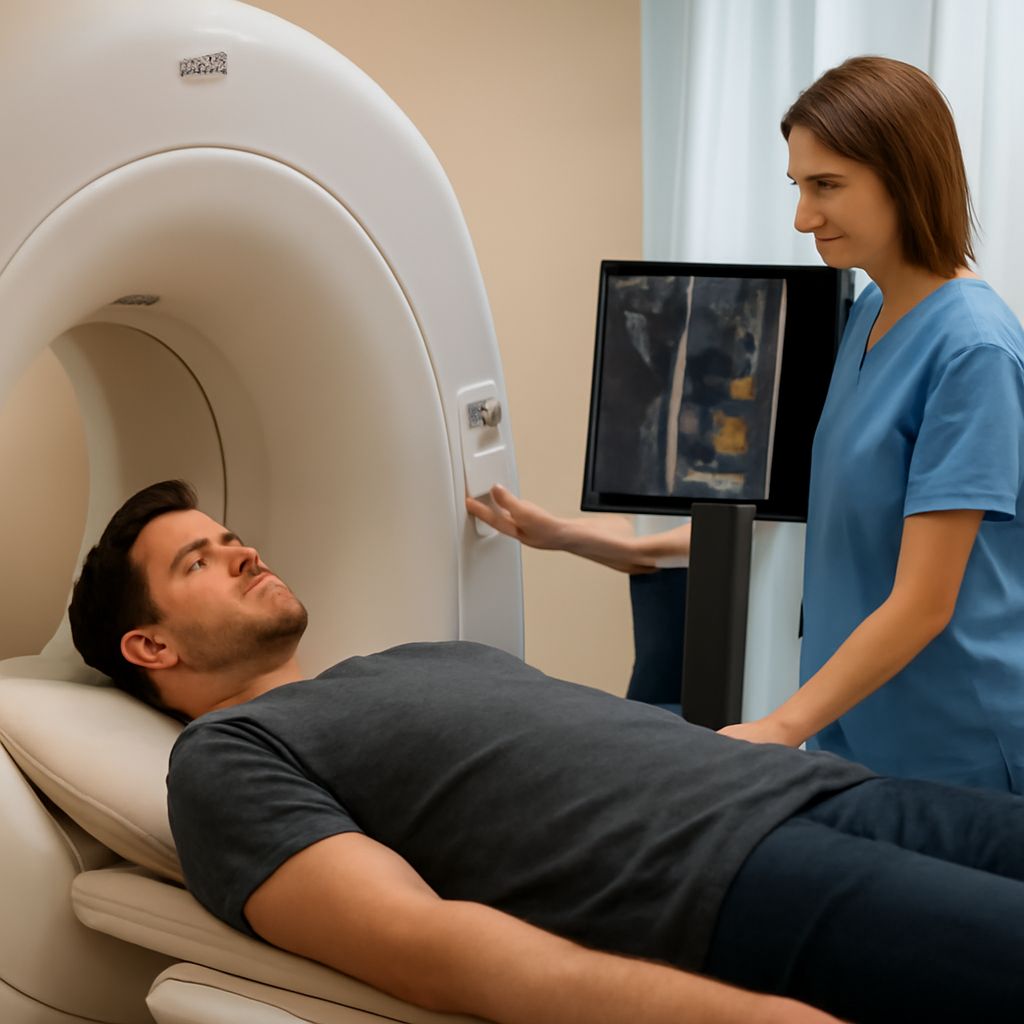
Spine MRI: What the Scan Shows, Equipment Used, and Average Cost Without Insurance
A spine MRI is one of the most frequently ordered diagnostic imaging studies in orthopedic and neurology practice. Whether ordered to evaluate chronic back pain, assess nerve compression, or investigate spinal stenosis, the MRI of the spine provides soft-tissue detail that X-ray and CT imaging cannot match. Understanding what the scan shows, what MRI equipment performs the imaging, and what the MRI average cost looks like helps patients make informed decisions about scheduling and coverage.
MRI of the spine uses a strong magnetic field and radiofrequency pulses to generate cross-sectional images of vertebral bodies, intervertebral discs, the spinal cord, and surrounding soft tissues. An MRI of the spine ordered without contrast can identify herniated discs, spinal cord inflammation, and degenerative changes. MRI average cost varies substantially depending on facility type, geographic region, and whether contrast enhancement is ordered.
What a Spine MRI Reveals and When It’s Ordered
Clinicians order spinal MRI scanning most commonly to evaluate radiculopathy—pain, numbness, or weakness radiating from the spine into the limbs. Herniated discs, foraminal narrowing, and ligamentous hypertrophy are readily visible on MRI of the spine, whereas these findings are poorly seen on plain film. For patients with red-flag symptoms such as bowel or bladder dysfunction, unexplained weight loss alongside back pain, or prior cancer history, the spine MRI becomes urgent rather than elective.
Lumbar, thoracic, and cervical sections of the spine are each imaged separately or in combination depending on the clinical question. Most institutions image one region at a time; ordering all three segments in a single visit is less common but possible in complex cases. The radiologist’s report interprets findings in the context of the ordering clinician’s clinical question and typically becomes available within one to three business days.
MRI Equipment: What Matters for Image Quality
The magnet strength used by MRI equipment is measured in Tesla (T). Standard clinical scanners operate at 1.5T, while high-field systems run at 3T. For spinal cord imaging, 3T equipment provides higher resolution and better signal-to-noise ratio, which is particularly valuable for detecting small lesions in multiple sclerosis workups or subtle disc extrusions. The bore diameter—the tunnel opening—also matters for patient comfort; wide-bore and open MRI units accommodate larger patients or those with claustrophobia, though open-design equipment generally operates at lower field strengths.
Modern MRI equipment includes dedicated spine surface coils, which are receiver arrays placed around the body region being scanned to maximize signal from spinal structures specifically. These phased-array coils improve image quality significantly compared with older body-coil imaging. Patients who are unsure about the equipment at a given facility can ask whether the scanner is 1.5T or 3T and whether dedicated spine coils are used—two questions that meaningfully affect diagnostic yield.
MRI Average Cost and Coverage Considerations
MRI average cost for a spinal study without insurance ranges from approximately $400 at imaging-center cash-pay rates to over $3,500 at hospital-based facilities billed at full chargemaster prices. The gap between outpatient imaging centers and hospital facilities is substantial; patients with high-deductible plans or no coverage often save significantly by choosing a freestanding imaging center over a hospital-affiliated unit.
With insurance, the patient’s responsibility for an MRI of the spine depends on deductible status, in-network vs. out-of-network classification, and whether the plan requires prior authorization. Most commercial insurance plans and Medicare Part B cover MRI scanning when a physician certifies medical necessity. Denied claims can often be appealed with supporting clinical documentation.
Cost comparison tools offered by insurance companies, hospital price transparency portals (now federally mandated), and independent healthcare price databases allow patients to compare imaging prices before scheduling. Negotiating cash-pay rates directly with an imaging center, or requesting the “self-pay discount,” can reduce costs by 30 to 50 percent from the standard list price.
Next steps: If a spine MRI has been ordered, confirm whether your facility is in-network and whether prior authorization is required. If paying out of pocket, call at least two to three imaging centers to compare cash-pay rates before scheduling.