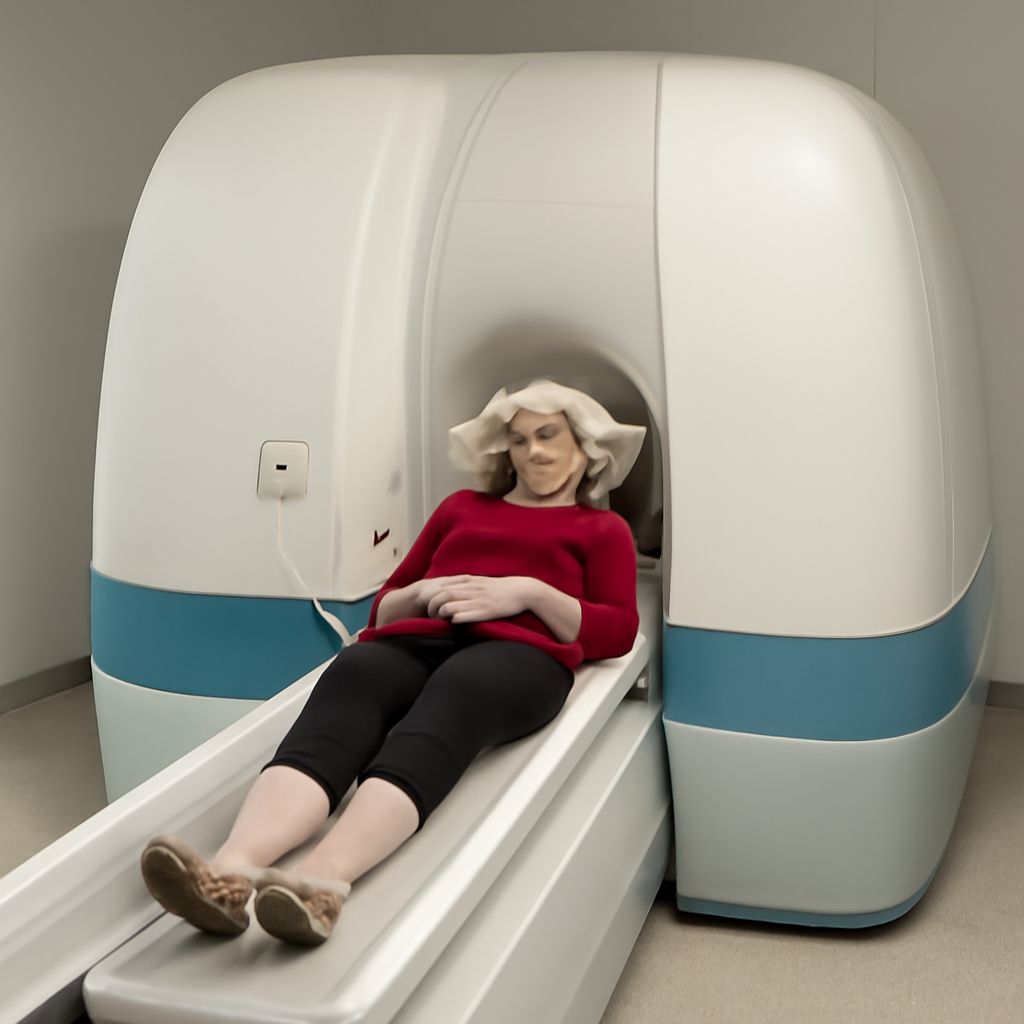
Stand Up MRI: Upright and Open Scanning Options and Costs
Traditional MRI requires patients to lie still inside a cylindrical bore scanner for extended periods, which creates challenges for claustrophobic patients, larger patients, and patients whose symptoms are only present when they are upright. A stand up mri addresses these limitations by imaging patients while they are weight-bearing in either a standing or seated position. Understanding how a standing mri works, how it compares to conventional closed scanners, and how much is an mri scan in upright configurations helps patients and providers evaluate whether this technology is the right imaging choice.
Upright mri technology and open upright mri options have expanded patient access to diagnostic imaging while providing clinically meaningful information about spinal conditions that only manifest under the mechanical load of body weight. The clinical cases where upright scanning adds genuine diagnostic value differ from those where standard supine scanning is fully adequate, and understanding this distinction helps patients ask informed questions about their imaging orders.
Stand Up MRI: How Upright and Weight-Bearing Imaging Works
A stand up MRI scanner positions the patient between two large plates that generate the magnetic field vertically rather than horizontally, allowing the patient to sit or stand during imaging. The scanner has an open design with no surrounding bore, which eliminates the enclosed feeling that triggers claustrophobia in some patients. The open vertical configuration also accommodates patients with limited mobility who cannot comfortably lie flat for extended periods.
The primary clinical advantage of upright or weight-bearing MRI is its ability to demonstrate dynamic spinal changes that disappear when the patient lies down. Spinal stenosis, for example, can be significantly worse in the standing position because the ligamentum flavum buckles posteriorly under axial load, narrowing the spinal canal more than it does in the recumbent position. Similarly, spondylolisthesis (slippage of one vertebra over another) may be more severe and more clinically meaningful in the standing position than on a supine scan, affecting surgical planning.
Upright MRI is also useful for patients whose back or hip pain is only present when standing or walking. Imaging these patients supine often produces a relatively normal-appearing scan that does not explain their symptoms, while upright imaging in the weight-bearing position reveals the pathology responsible for their standing-position pain. This diagnostic capability makes upright MRI particularly valuable in evaluating degenerative spinal conditions in active patients.
Open Upright MRI: How It Compares to Conventional Closed Scanners
The primary tradeoff with open upright MRI technology is image resolution. Stand-up MRI scanners currently operate at lower field strengths than high-field closed bore scanners. Most upright MRI systems operate at 0.5 to 1.0 Tesla, while modern high-field closed bore scanners operate at 1.5 or 3.0 Tesla. Higher field strength produces higher signal-to-noise ratio and better image resolution, which means high-field supine scanners generally produce clearer images for evaluating small structures, soft tissues, and subtle pathology.
For the clinical indications where upright positioning provides meaningful diagnostic advantage, the lower image resolution of standing MRI is an acceptable tradeoff. For imaging questions that require the highest possible resolution, such as small nerve root evaluation, internal auditory canal assessment, or brain tumor characterization, a high-field supine scanner remains the preferred modality even for patients who might benefit from the open configuration for comfort reasons.
Scan times on upright MRI systems tend to be longer than on high-field systems because of the lower signal-to-noise ratio. Patients must hold their position without moving for extended acquisition windows. For elderly patients or those with significant musculoskeletal pain, holding a standing position for 20 to 30 minutes can be challenging. The seated option available on some upright systems addresses this limitation for patients who cannot comfortably stand for the full scan duration.
How Much Is an MRI Scan: Upright vs Conventional Pricing
The cost of an upright MRI scan is generally higher than equivalent conventional closed-bore imaging in most markets because upright scanners are less common and the technology represents a specialty service. Upright MRI facilities may charge $800 to $2,000 or more for a lumbar spine study without contrast, depending on geographic market and facility pricing. Conventional closed-bore lumbar spine MRI at a freestanding imaging center typically costs $300 to $800 for cash-pay patients.
Insurance coverage for upright MRI varies by payer and clinical indication. Some insurers cover upright MRI for specific indications where the clinical justification for weight-bearing imaging is well documented. Others categorize upright MRI as investigational for certain applications or simply do not have specific coverage policies that address it, defaulting to coverage decisions on a case-by-case basis based on medical necessity documentation. Obtaining prior authorization and confirming coverage before scheduling an upright MRI is particularly important given the higher cost and variable coverage landscape.
For patients who need upright MRI but face insurance coverage challenges, the conversation with the ordering provider should include a discussion of whether the clinical question can be adequately answered with conventional supine imaging. In many cases, high-quality supine imaging with functional positioning sequences, such as flexion-extension MRI views performed with the patient in different positions on a conventional scanner, can approximate some of the diagnostic value of true weight-bearing imaging at a lower cost and with greater payer acceptance.
Finding Open Upright MRI Facilities Near You
Open upright MRI facilities are available in major metropolitan areas but are not universally distributed across all markets. Searching specifically for upright MRI, weight-bearing MRI, or open upright MRI centers in your area identifies the specialty facilities that offer this technology. Not all open MRI facilities are upright scanners; some open scanners are simply low-field systems with a more spacious bore designed for patient comfort in a horizontal configuration rather than true upright positioning.
Asking your ordering provider whether they have experience with upright MRI reports from a specific facility and whether the radiologists interpreting upright studies are familiar with the normal and pathological appearance of weight-bearing spinal anatomy helps evaluate whether the facility will produce a clinically useful report. Upright MRI interpretation requires familiarity with how normal anatomy differs in the upright versus supine position, and radiologists without experience in this technology may be less reliable in distinguishing genuine pathology from positional differences.
For patients in areas without upright MRI access who have significant claustrophobia concerns, wide-bore closed scanners (70-centimeter bore diameter) at 1.5 or 3.0 Tesla provide a more spacious scanning environment while maintaining high image quality. Many patients who expect to be unable to tolerate conventional MRI do well in wide-bore configurations with appropriate preparation including anxiolytic medication, relaxation coaching, and communication devices that allow them to speak with the technologist during the scan.