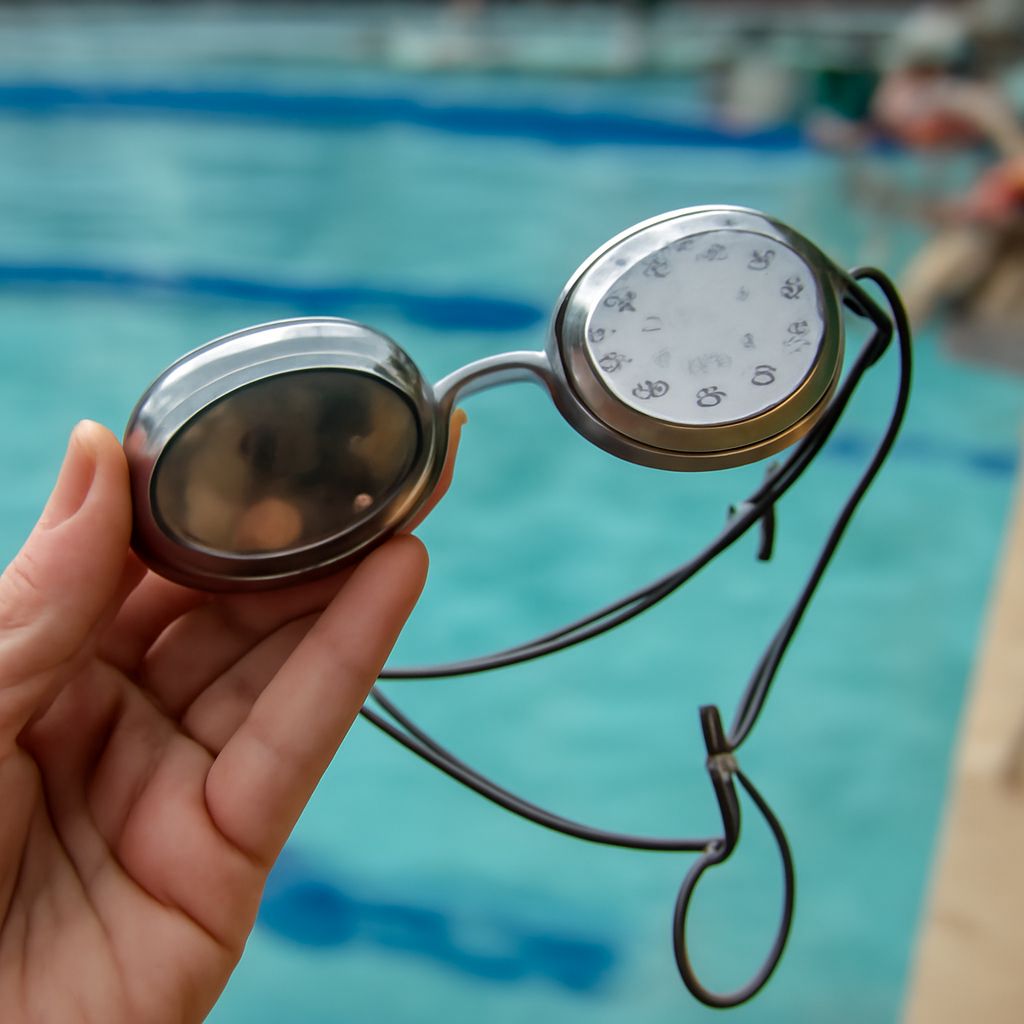
Prescription Goggles for Swimming: How to Find the Right Pair
If you wear glasses or contacts and want to see clearly in the pool, prescription goggles are the practical solution. Standard swim goggles protect your eyes from chlorine but leave everything blurry if you have a refractive error. Prescription swimming goggles are made with corrective lenses built directly into the goggle frame, so you see clearly underwater and when you surface. Finding well-fitted prescription goggles swim gear used to mean ordering custom-built goggles, but today the market offers both pre-made correction options and fully custom versions. Choosing the right prescription goggles for swimming depends on your exact prescription, how seriously you swim, and whether standard stock powers match your needs. Getting the prescription right on your swim goggles prescription is non-negotiable: close-but-not-right vision correction underwater is almost as frustrating as wearing no correction at all.
This guide walks you through what to know before you buy, how prescription swim goggle options differ, and how to get the right fit for your specific correction needs.
Stock Prescription Goggles vs. Custom Lenses
Stock prescription swim goggles come in fixed power increments, typically from -1.0 to -8.0 in 0.5 or 1.0 steps. If your prescription is in that range and close to a round number, stock goggles can work well and cost $15–$50. The catch is that stock lenses don’t correct for astigmatism (cylinder correction), so if you have significant astigmatism, stock corrective goggles will leave you with less-than-sharp vision in the pool even if the sphere power is close.
Custom prescription swim goggles are made to your exact prescription, including sphere, cylinder, and axis. These cost more, typically $60–$200 depending on the frame and lens type, but they deliver precise vision correction that matches what you get from your regular glasses or contacts. If your prescription includes a cylinder correction of -0.75 or higher, custom swim goggles for prescription use are the right investment. Several online optical labs and specialty swim retailers offer this service.
Reading Your Swim Goggle Prescription
Your eyeglass prescription includes the same data you need for swim goggles: OD (right eye), OS (left eye), sphere power, cylinder, and axis. When ordering corrective swim goggles, you’ll enter these values. One important note: the vertex distance (distance from lens to eye) differs between glasses and goggles, which can affect how the correction feels at strong prescriptions (above -5.0 or +4.0). Some online calculators help you adjust the prescription for goggle vertex distance, or you can ask the retailer’s optical support team for guidance on strong prescriptions.
Fit, Frame, and Lens Options for Swim Goggles
Getting a good seal is the most important functional factor in any swim goggle, prescription or not. Water leaking into the goggle is uncomfortable and ruins the optical benefit of prescription lenses. Goggles come in gasket or Swedish styles. Gasket styles use a silicone or foam seal that sits around the eye socket; Swedish styles use harder plastic that rests directly on the orbital bone. Gasket goggles are more comfortable for longer sessions, while Swedish styles are preferred by competitive swimmers for their lower profile and drag.
For prescription swimming goggle shoppers, look for frames that allow separate correction for each eye (the most important feature for anyone with different prescriptions in each eye). Many stock corrective goggles come with matched lenses, which means both eyes get the same power, only useful if your two eyes have identical prescriptions. Goggles with individually adjustable lens inserts, or custom-ordered pairs with different powers per eye, are the standard solution for asymmetric prescriptions.
Anti-Fog and UV Protection on Prescription Swim Goggles
Anti-fog coatings on swim goggle lenses help maintain clear vision throughout your session. Factory anti-fog coatings work well initially but degrade with repeated use and cleaning. Applying anti-fog drops or spray before each swim extends the effective life of the coating. UV-blocking lenses are standard on outdoor swim goggles and protect the eyes during open-water swimming where sun exposure is significant. Indoor pool use doesn’t require UV protection, but it doesn’t hurt.
Safety Recap
Never wear standard contact lenses while swimming, as pool water can trap microorganisms between the lens and cornea, creating a risk of serious eye infection. Prescription swim goggles eliminate this risk entirely. If you do swim occasionally with contacts, use daily disposables that you discard immediately after the swim and avoid opening your eyes underwater. When your prescription goggles arrive, test them in shallow water first before any open-water or lap-swimming use to confirm the correction feels right and the seal holds.