Eye Prescription Axis and Contacts vs Glasses: What the Numbers Mean
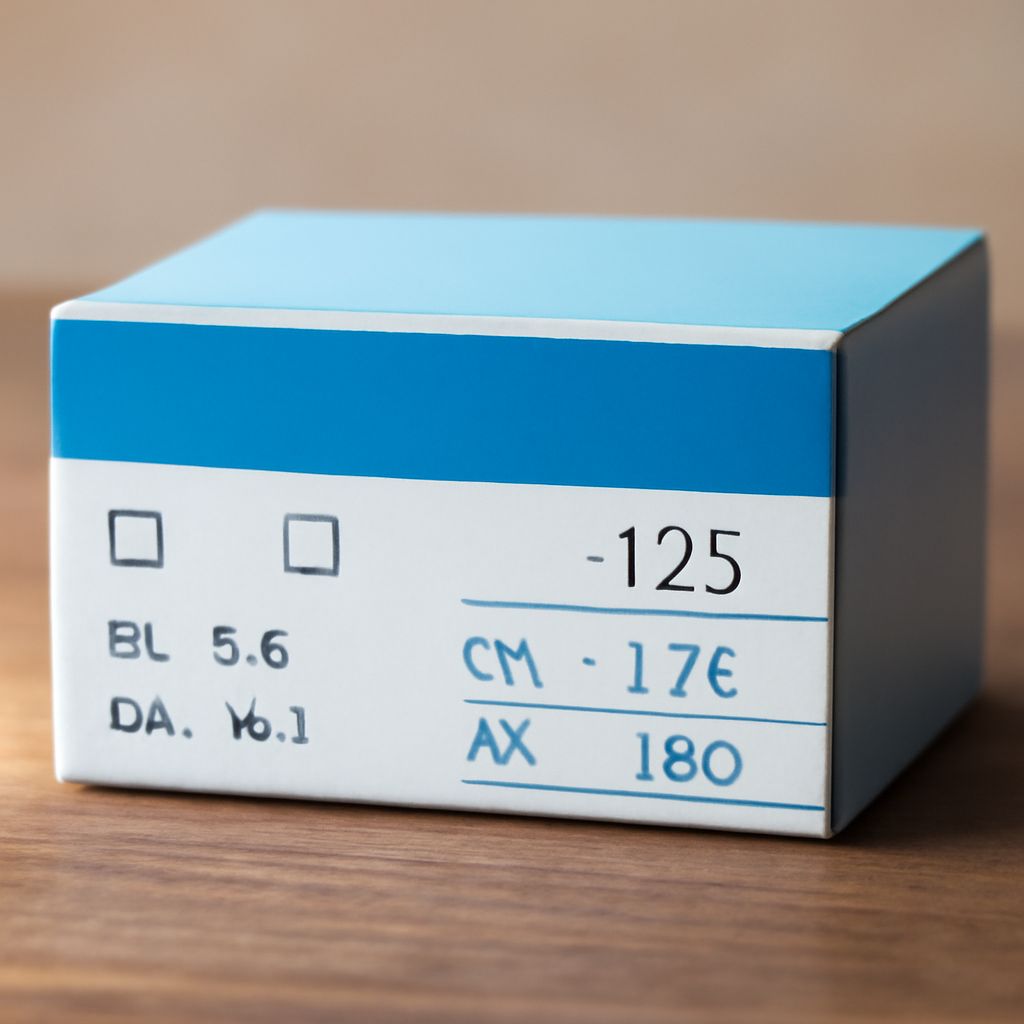
Reading an eye prescription for the first time often raises more questions than it answers. Eye prescription axis is the number that tells the lab where astigmatism correction needs to be oriented on the lens, measured in degrees from 1 to 180. It appears only when there is a cylinder power listed, and it works alongside sphere and cylinder to fully describe the refractive correction needed. Contact vs glasses prescription numbers are not interchangeable, and understanding why do i need a prescription for contacts requires understanding the differences between these two correction formats.
Contact prescription vs glasses involves more than just the numbers themselves. Contacts sit directly on the eye, requiring different power calculations and additional fitting measurements that eyeglasses simply do not need. A glasses prescription vs contacts comparison shows both numerical differences and entirely different parameters that apply only to contact lenses.
Understanding Eye Prescription Axis
The axis in an eye prescription refers to the orientation of the cylindrical correction used to treat astigmatism. Astigmatism means the cornea or lens has an uneven curvature, like a football rather than a sphere. The cylinder power corrects the blurring caused by that curvature, while the eye prescription axis locates the orientation of the correction on the lens.
An axis of 180 means the correction is oriented horizontally. An axis of 90 means it is oriented vertically. Numbers in between describe oblique orientations. If the axis is even slightly off in contact lenses, vision can be noticeably blurred, which is why toric contact lenses (those that correct astigmatism) include stabilization features to prevent rotation on the eye.
Contact Prescription vs Glasses Prescription Differences
Contact prescription vs glasses prescription differences go beyond just adjusted power numbers. A glasses prescription includes sphere, cylinder, axis, and sometimes prism and add power for bifocals. A contact prescription adds base curve, diameter, and lens brand or material specifications. These extra parameters ensure the lens fits the curvature of the eye correctly.
The power values in a contact prescription may also be slightly different from those in a glasses prescription due to the different distance between the correction and the eye. Glasses sit about 12 millimeters from the cornea, creating a vertex distance effect that is negligible at lower prescriptions but meaningful at higher powers. For prescriptions above plus or minus 4 diopters, the contact lens power is typically adjusted from the glasses prescription vs contacts calculation.
Why Do I Need a Prescription for Contacts
Why do i need a prescription for contacts when I already have a glasses prescription? Contact lenses are regulated medical devices in most countries, requiring a separate fitting and prescription because incorrect fit can cause corneal abrasion, infection, or hypoxia. Even cosmetic non-corrective contacts that change eye color require a proper fitting and prescription for these reasons.
A contact lens examination includes checking the corneal curvature and health, fitting trial lenses, assessing the lens fit on the eye under the slit lamp, and confirming that the patient can handle the lenses safely. The resulting contact lens prescription is valid only for the lens brand and type specified. Switching to a different brand requires a new fit evaluation because parameters vary between manufacturers.
Contacts vs Glasses Prescription: Practical Implications
The practical implication of the contact vs glasses prescription difference is that using your glasses prescription to order contact lenses online without a proper fitting carries real risks. Beyond potential misfitting, online retailers are supposed to verify prescriptions, and using an expired or glasses-only prescription to order contacts bypasses the safety checks intended to protect your ocular health.
Annual contact lens exams allow the prescriber to check for early signs of contact-related corneal changes before they become serious. The glasses prescription vs contacts examination also gives an opportunity to update both prescriptions if your vision has changed, ensuring you are always seeing at your best correction in both modalities.