Insulin Units to ML: How to Read and Use Dosing Correctly
Insulin Units to ML: How to Read and Use Dosing Correctly
Dosing insulin accurately is one of the most important skills a person with diabetes or their caregiver can develop. A mistake of even a few units can cause serious consequences. Converting insulin units to ml is not complicated once you understand the concentration of the insulin you are using, and getting that baseline right prevents errors at every step.
Most insulin in the United States comes in a concentration of 100 units per milliliter (U-100). This means that 1 ml of the liquid contains 100 units. A sliding scale for insulin is a common tool that guides dose adjustments based on blood glucose readings. What is a unit of insulin? It is a standardized biological measurement of insulin activity. How much is a unit of insulin in volume? For U-100 insulin, it equals 0.01 ml. Regular insulin dosage varies by individual and condition, and any changes should always be made with medical guidance.
What Is a Unit of Insulin
Converting Insulin Units to ML
The unit as a measurement of insulin activity was established to allow consistent dosing across different insulin preparations. One unit of insulin activity is defined by its biological effect, not by a fixed weight.
Converting the insulin unit to a milliliter amount depends entirely on the concentration. U-100 insulin contains 100 units per ml, so dividing units by 100 gives you the volume in milliliters. If a provider orders 30 units, that equals 0.30 ml using U-100 insulin.
U-500 insulin, which is five times more concentrated, equals 0.002 ml per unit. This is why matching the syringe to the insulin concentration matters. A U-100 syringe used with U-500 insulin will result in a significant overdose.
Standard Syringe Measurements
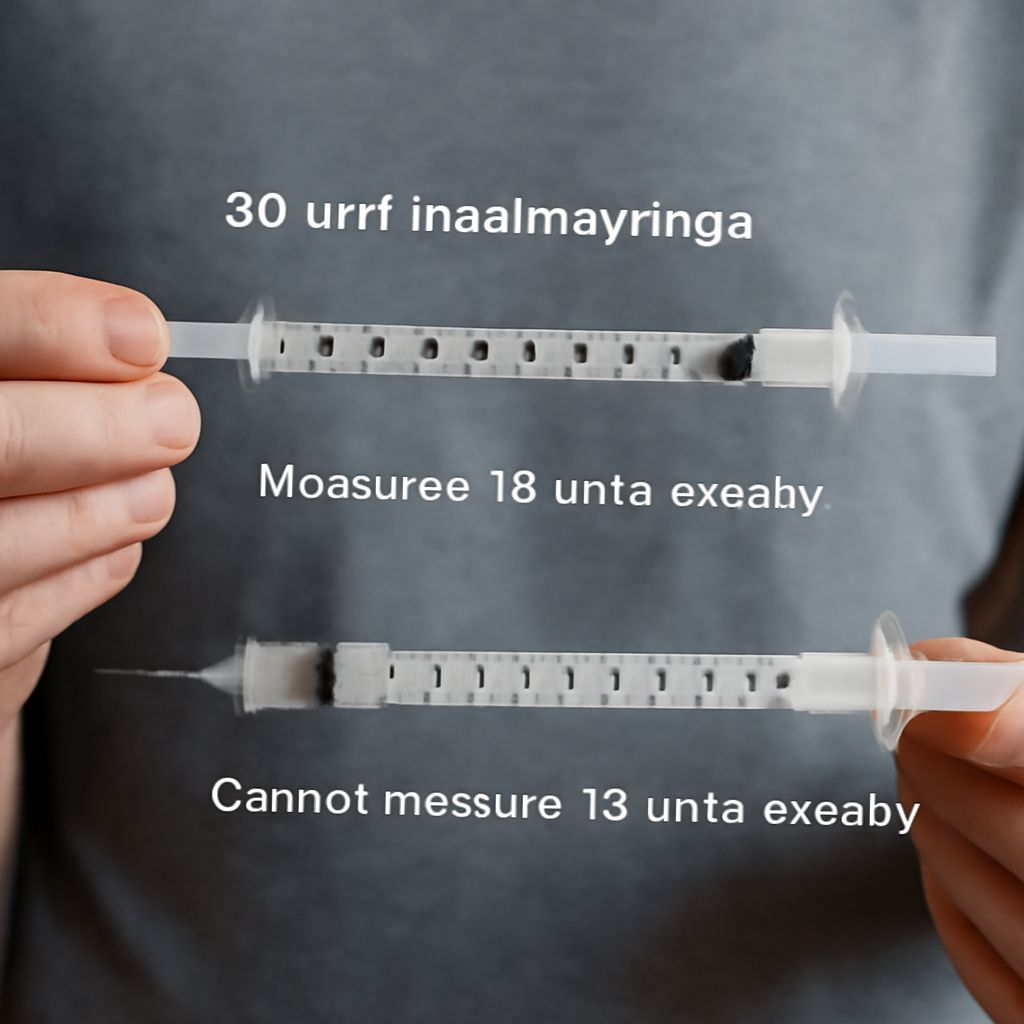
Insulin syringes are marked in units, not milliliters, which makes drawing doses simpler. A 30-unit syringe holds 0.3 ml; a 50-unit syringe holds 0.5 ml. Reading the syringe markings correctly requires good lighting and steady hands.
Pen devices display units directly, removing the need for ml conversion during everyday use. They are calibrated to deliver exact unit amounts with each click or dial setting.
Using a Sliding Scale for Insulin
When Sliding Scale Dosing Is Used
The sliding scale approach adjusts dose based on a blood glucose reading taken before a meal or at a scheduled time. If glucose is within a normal range, no extra insulin may be given. As the reading rises into higher ranges, the assigned dose increases in steps.
Using an insulin sliding scale is most common in hospital settings, where glucose can change quickly due to illness, stress, or altered eating. Some patients also use a version at home under provider supervision.
The scale itself is prescribed by the care team. It is not a one-size-fits-all protocol. Each person’s sensitivity to insulin affects how the scale is calibrated.
Regular Insulin Dosage: General Guidance
How Much Is a Unit of Insulin in Practice
Regular insulin, also called short-acting or human insulin, has an onset of about 30 minutes and peaks between 2 and 3 hours. It is sometimes used before meals to control postprandial glucose spikes.
The regular insulin dosage prescribed will depend on weight, total daily insulin needs, carbohydrate intake, and correction factor. A typical starting correction factor might be 1 unit per 50 mg/dL of glucose above target, but this is individually adjusted.
Measuring how many units someone actually needs requires reviewing glucose logs over time. Providers look for patterns of high or low readings and adjust accordingly. Self-adjusting insulin without medical input carries real risk.
If you are new to insulin therapy, ask your provider to walk through unit-to-volume conversion, how to draw a dose correctly, and how to use the sliding scale if one is prescribed. Written instructions help reduce errors, especially during illness or stress.
Key takeaways: U-100 insulin equals 100 units per ml; always match syringe type to insulin concentration; sliding scale dosing requires individual calibration; and regular insulin dosage should only be adjusted with provider guidance.