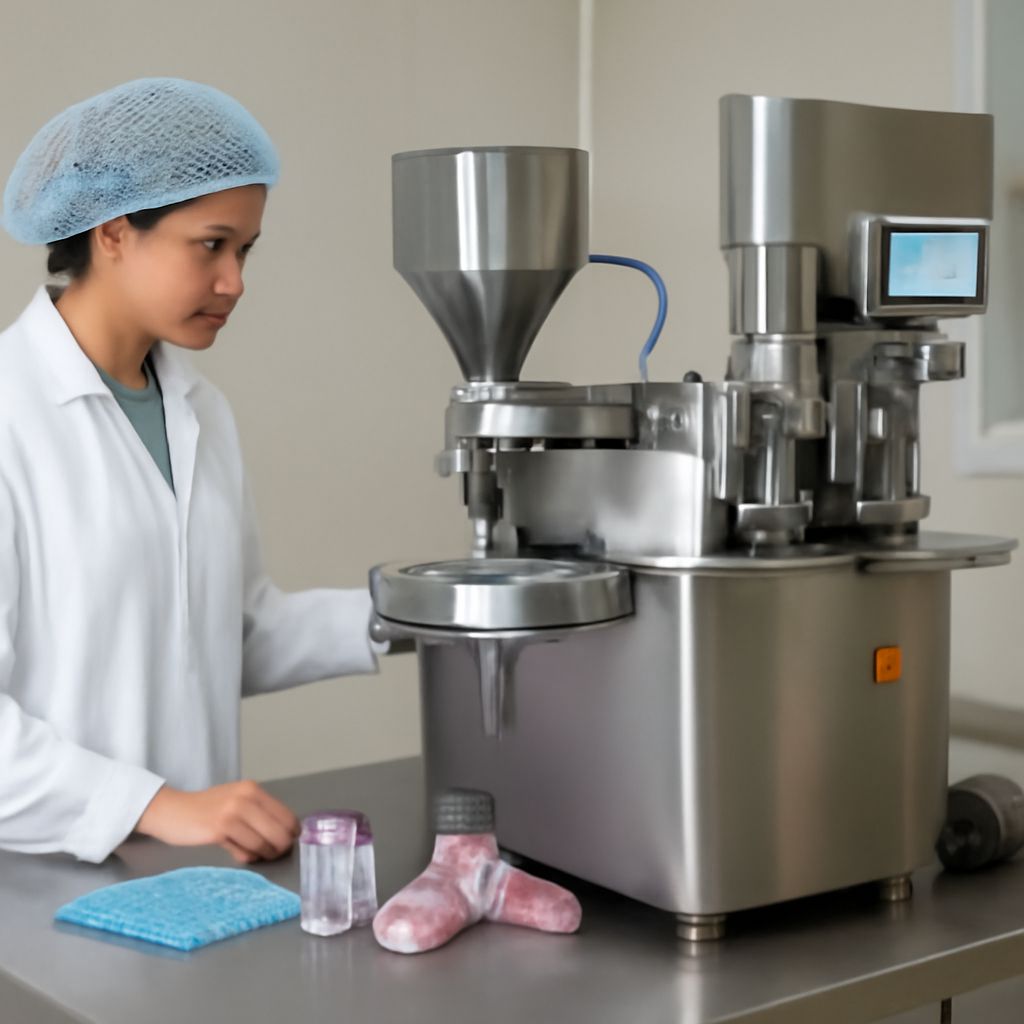
Automatic Capsule Filling Machine: Types, Uses, and Selection Guide
Automatic Capsule Filling Machine: How to Choose the Right Equipment
An automatic capsule filling machine handles high-volume capsule production with minimal operator input, making it the standard for commercial pharmaceutical and nutraceutical manufacturing. A semi automatic capsule filling machine bridges the gap between hand-filling tools and fully automated systems — it requires an operator to position caps and bodies but automates the filling and closing steps. Finding the best capsule filling machine for your operation depends on batch size, fill material type, and budget. An automatic capsule machine in a commercial setting can fill tens of thousands of capsules per hour with consistent weight accuracy. A pill capsule machine at the small-batch or R&D level may handle a few hundred capsules per run while still delivering professional results.
This guide covers the main machine types, key features to evaluate, and how to match equipment to your production requirements.
Types of Capsule Filling Equipment
Fully automatic systems use rotary or linear indexing mechanisms to open, fill, close, and eject capsules continuously. They typically include integrated weight checking and rejection systems. Semi-automatic systems require an operator to load the capsule tray, engage the filling head, and remove finished capsules, but they automate the mechanical filling action itself. Manual filling boards are the entry point for compounding pharmacies and very small operations — they fill 100 to 300 capsules per batch with no mechanical assistance.
Rotary vs. Linear Automatic Machines
Rotary capsule machines arrange work stations around a central turret and are faster for high-volume production. Linear machines move capsules through a straight track of stations and are often easier to clean and validate for pharmaceutical GMP requirements.
Key Features to Evaluate
Fill weight accuracy is the primary performance metric — look for machines that hold within 1 to 3 percent of target weight across the run. Changeover time between capsule sizes affects production flexibility; machines with quick-change tooling reduce downtime significantly. Material compatibility matters if you’re filling hygroscopic or sticky powders, liquids, or pellets. Validation documentation and IQ/OQ/PQ support are non-negotiable for regulated pharmaceutical production.
Choosing the Best Capsule Filling Machine for Your Scale
Small compounding pharmacies typically do well with a semi-automatic system capable of 3,000 to 10,000 capsules per hour. Commercial nutraceutical manufacturers filling multiple SKUs daily need a fully automatic capsule machine with fast format changeovers. Research and development labs benefit from laboratory-scale pill capsule machines that accept small batch sizes without wasting expensive active ingredients.
Next steps: Identify your target capsule size and fill material before contacting equipment vendors. Request a demonstration with your actual fill material to verify weight accuracy under real conditions. Confirm that the manufacturer provides validation documentation if your facility falls under regulatory oversight.