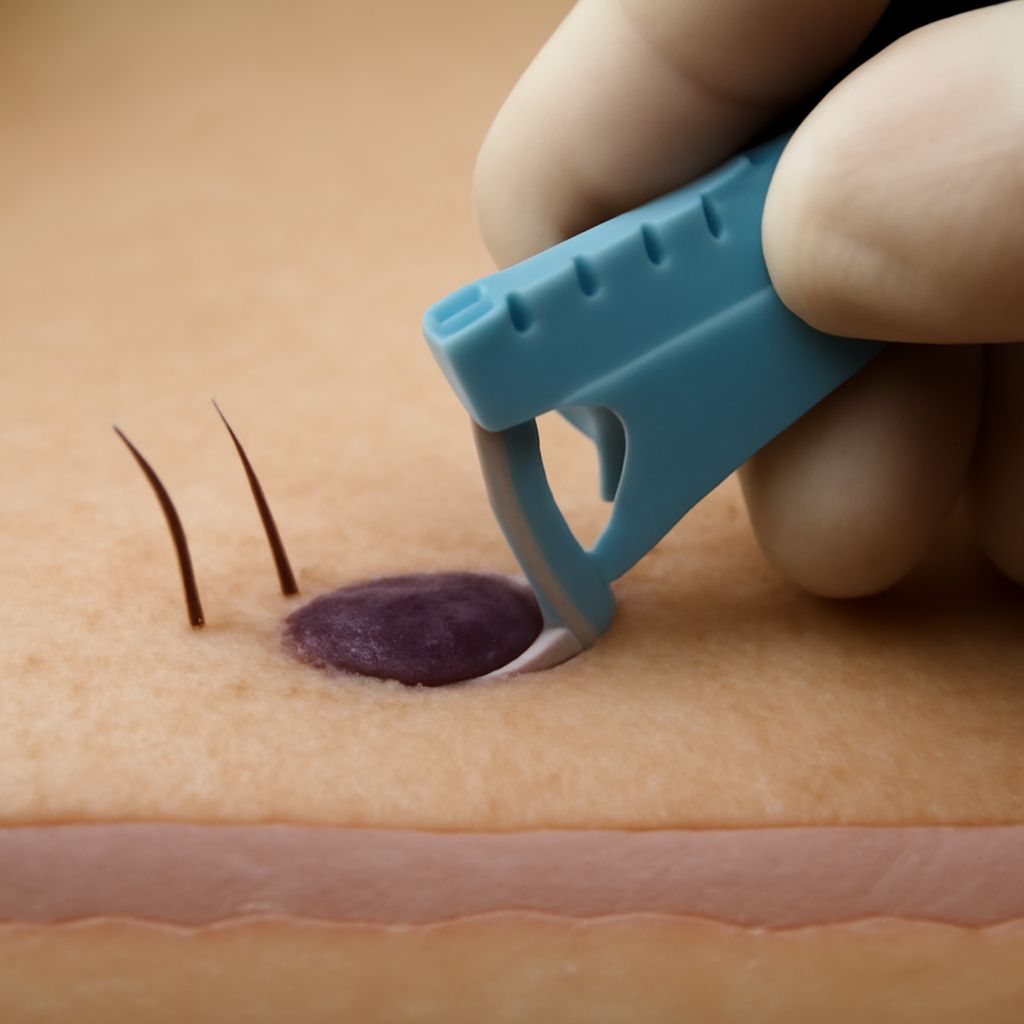
Biopsy Scar Healing: What to Expect After Skin Biopsy
Biopsy Scar Healing: What to Expect After Skin Biopsy
A skin biopsy is a minor procedure with real healing implications. Whether you had a shave, punch, or excisional biopsy, understanding what happens to the wound afterward reduces anxiety and helps you take the right steps to minimize scarring. Biopsy scar development depends on biopsy type, wound care quality, and individual healing factors including skin type and genetics. Knowing how long does it take for biopsy results to come back helps patients manage the waiting period alongside their wound care routine.
Shave biopsy scar outcomes differ from punch biopsy scars because the techniques remove tissue at different depths. A shave biopsy removes superficial tissue and typically heals with minimal scarring if the wound is kept moist and protected. A punch biopsy goes deeper and often requires a suture or two, with a corresponding skin biopsy scar that may be more linear. Prescription scar cream and other post-procedure treatments can support healing once the wound has fully closed.
Shave Biopsy Scar Healing Timeline
A shave biopsy scar goes through predictable stages. The first week involves scab formation and initial wound closure. The wound bed granulates, meaning new tissue fills the shallow defect. By two to three weeks, the surface has typically re-epithelialized. The resulting mark is usually flat, slightly pink, and roughly the size of the original biopsy site.
Over the following months, the skin biopsy scar continues to mature. Redness fades as blood vessels regress. The mark may become hypopigmented, appearing lighter than surrounding skin, particularly in individuals with darker skin tones. Full scar maturation takes six to twelve months in most cases. Protecting the healing shave biopsy scar from sun exposure during this period reduces the risk of permanent pigmentation changes.
How Long Does It Take for Biopsy Results
How long does it take for biopsy results to come back? Most routine skin biopsies are processed and reported within three to seven business days. Rush processing may be requested when melanoma is suspected or when results will immediately affect treatment planning, in which case results may be available within one to two days.
Complex cases involving immunohistochemistry, special stains, or expert consultation can take ten to fourteen days or longer. Patients waiting on biopsy results should not interpret a longer wait time as a sign of a serious finding. Delays often reflect laboratory workflow or the need for additional testing rather than an abnormal result being deliberated.
Prescription Scar Cream After Biopsy
Prescription scar cream options include silicone-based formulations and topical retinoids, both of which have evidence supporting their use in scar remodeling. Silicone sheeting and gels are among the most studied scar treatments and work by hydrating the stratum corneum and regulating fibroblast activity. They are most effective when applied consistently over several months beginning after the wound has fully closed.
Topical retinoids support collagen remodeling and can improve texture and pigmentation in mature scars. They are prescription items that require provider guidance because of potential irritation and sun sensitivity. For a skin biopsy scar that remains raised, red, or thickened beyond expected healing time, a dermatology consultation can assess whether prescription scar cream, laser treatment, or other interventions are appropriate.
Minimizing Skin Biopsy Scar Formation
The most impactful steps in minimizing skin biopsy scar formation happen in the first weeks after the procedure. Keeping the wound moist with petrolatum or a similar occlusive ointment while it heals reduces scab formation and supports faster, flatter healing. Avoiding picking or scratching the wound, keeping sun exposure minimal with SPF coverage once re-epithelialized, and following up as directed by the provider all contribute to the best possible scar outcome.
A biopsy scar that becomes increasingly raised, itchy, or spreads beyond the original wound margins after several months may be developing into a hypertrophic scar or keloid. These require evaluation by a dermatologist or plastic surgeon for appropriate management, which may include intralesional steroid injections, pulsed dye laser, or pressure therapy depending on scar type and location.