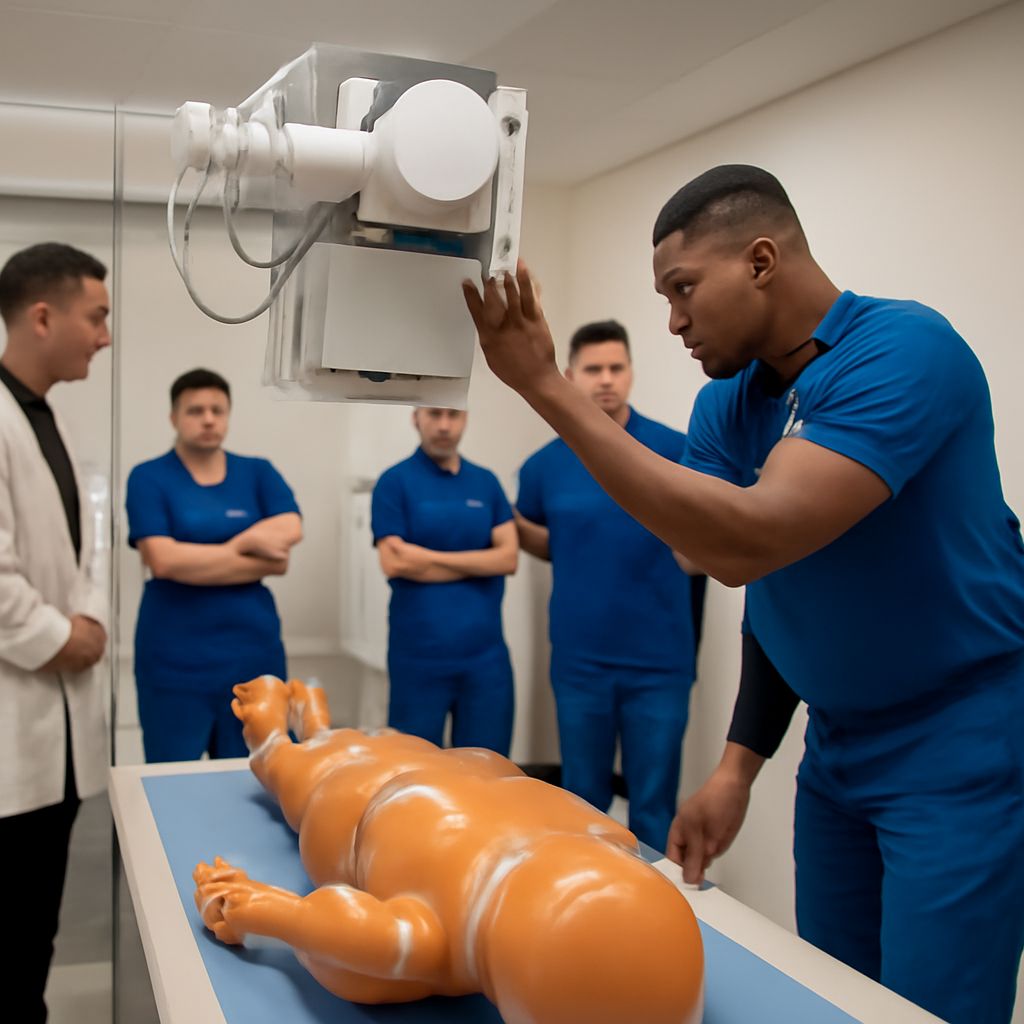
How to Become an MRI Tech: Education, Training, and Certification
How to Become an MRI Tech: Education, Training, and Certification
If you’re drawn to diagnostic imaging and want a healthcare career that combines technical skill with direct patient care, figuring out how to become an MRI tech is a practical first step. MRI technologists operate magnetic resonance imaging equipment, position patients, adjust scan protocols, and ensure diagnostic image quality — all without ionizing radiation. The career path is structured, the credential requirements are clearly defined, and demand continues to grow as hospitals expand imaging capacity.
Learning how to become an MRI tech means understanding three core stages: choosing from accredited MRI tech schools, completing hands-on MRI tech training, and passing the national certification exam. This article maps out each stage so you can plan your timeline with confidence.
What MRI Technologists Do Every Day
MRI technologists prepare patients for scans by explaining the procedure, screening for contraindications (metal implants, pacemakers, claustrophobia), and positioning them correctly inside the scanner bore. They operate the console to execute sequences prescribed by the radiologist and monitor patient comfort throughout. When contrast agents are used, techs may administer them intravenously. After scanning, they review images for quality before the radiologist interprets them.
The work is collaborative — you’ll interact daily with radiologists, nurses, and referring physicians — and physically active. Patient transfers, positioning, and equipment management are all part of the job. Strong communication skills matter as much as technical proficiency.
Educational Requirements: MRI Tech Schools and Programs
Associate Degree vs. Bachelor’s Degree Programs
Most MRI tech schools offer the credential through one of two routes. An associate degree in radiologic technology or MRI, typically taking two years, is the most common entry point. A bachelor’s degree program runs four years and may open additional career advancement opportunities in management, education, or advanced imaging modalities. Both routes qualify you to sit for the national certification exam if completed at an accredited institution.
Some programs are offered as post-primary certificates for individuals who are already licensed radiologic technologists and want to add MRI as a specialty. These MRI tech training certificates typically take 12 to 24 months and can often be completed while working in a radiology department.
Accreditation: Why It Matters
Enrollment in a program accredited by the Joint Review Committee on Education in Radiologic Technology (JRCERT) is essential. JRCERT-accredited MRI tech schools meet national standards for curriculum, clinical education, and student outcomes. Graduation from a non-accredited program may disqualify you from sitting for certification exams offered by the American Registry of Radiologic Technologists (ARRT) or the American Registry of Magnetic Resonance Imaging Technologists (ARMRIT).
MRI Tech Training and Clinical Hours
What MRI Technician Training Covers in the Classroom
Academic coursework in MRI technician training programs includes MRI physics and instrumentation, cross-sectional anatomy, patient assessment, pharmacology for contrast agents, and medical ethics. Safety training is a significant component — understanding magnetic field hazards, radiofrequency energy, and proper screening protocols is non-negotiable in an environment where ferromagnetic objects become lethal projectiles.
Most programs also cover basic pathology recognition so technologists can identify scan quality issues that might result from patient positioning errors or protocol selection problems, even though radiologists make the clinical diagnoses.
Clinical Rotation Requirements
MRI tech training programs require a defined number of supervised clinical hours, typically 800 to 1,400 hours depending on program length and type. During rotations, students perform scans under the direct supervision of licensed technologists, working toward competency in a range of procedures: brain and spine, musculoskeletal, cardiac, abdominal, and vascular imaging. Log books and competency sign-offs document your progression throughout the clinical phase.
Certification and Licensure After Graduation
After completing an accredited program in becoming an MRI technologist, you’ll apply to sit for either the ARRT examination in MRI or the ARMRIT primary pathway exam. Both require documented clinical competencies. Many states also require state licensure on top of national certification — check your state’s radiation control program for specific requirements.
Certification must be maintained through continuing education. ARRT requires 24 CE credits every two years, ensuring practicing technologists stay current with evolving protocols and safety standards in their MRI career path.
Job Outlook and Next Steps
The Bureau of Labor Statistics projects steady growth in radiologic and MRI technologist positions through the next decade, driven by aging population demographics and expanded use of MRI in oncology, neurology, and orthopedics. Median annual wages for MRI technologists are consistently above the national median for all occupations.
Once certified, you can specialize further in cardiac MRI, MRI-guided procedures, or move into quality assurance and department supervision. Many technologists also pursue additional registries in computed tomography, mammography, or nuclear medicine to increase scheduling flexibility and earning potential. Starting your MRI technologist career path with a clear plan for continuing education makes those transitions smoother down the line.